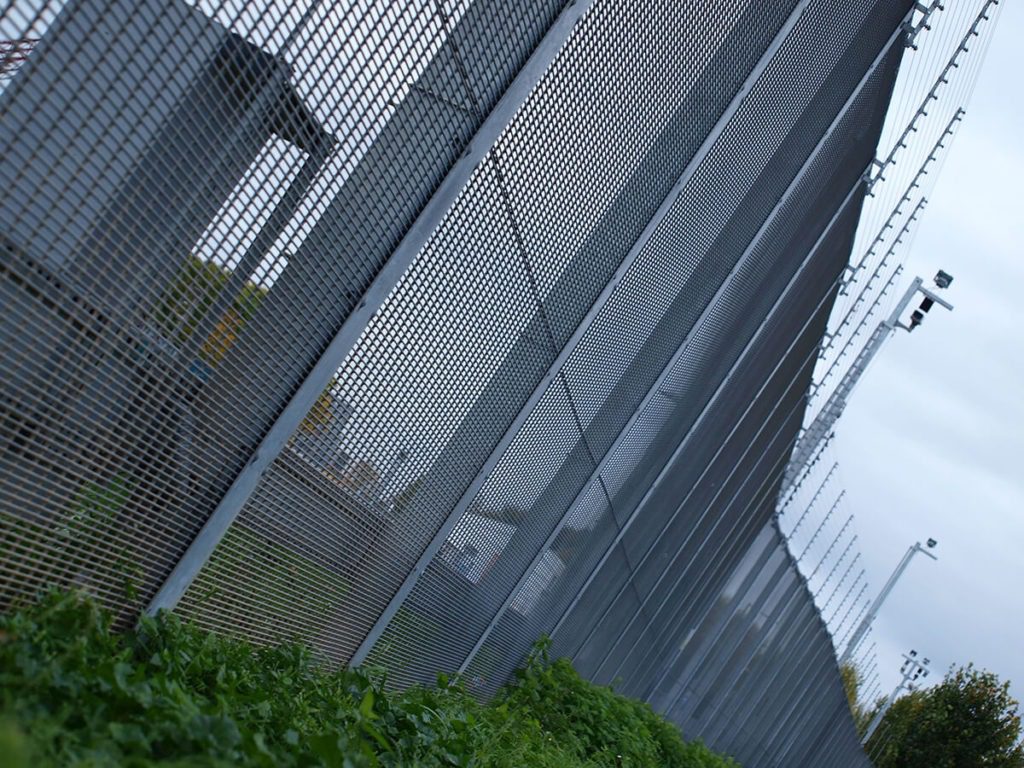
In days gone by, the general rule for security fencing was “thick is good”! You only have to look at a depth of medieval castle walls to see that security was all about size. Modern advances in materials and design result in contemporary security fencing actually looking surprisingly delicate! The fragility is deceptive, however. Contemporary mesh fencing offers an exceptional level of strength, as well as several other major advantages. Read on to discover why mesh fencing is the security fencing of choice for a wide range of security applications.
1. Reduced resistance to wind
One of the major issues with a solid fence is that it bears the full brunt of the wind. Particularly for a high, long fence, the amount of pressure that the wind can exert is enormous as a result if. As a result, if solid panels are used, there is a risk that they will come loose in high winds, immediately creating compromised security. In addition, there is the risk that falling fencing could injure someone or worse. Mesh alleviates this problem, allowing the wind to pass harmlessly through the structure without compromising the barrier’s integrity.
2. Mesh offers considerable visibility
Visibility through mesh is important for both security and function. Around sports courts and pitches, mesh protects spectators from flying balls, at the same time enabling them to have a good view of the action. When used as perimeter fencing, unauthorised personnel are clearly visible through mesh fencing. The lack of places to hide when a mesh fence is used is an important benefit of the material.
3. Strong and easy to maintain
As you would expect, a mesh fence is enormously strong, providing a robust barrier wherever it’s located. In addition, a weatherproof coating ensures that very little maintenance is needed once the mesh is in place. Particularly when a perimeter fence extends several miles and is a few metres high, minimal maintenance is always a bonus.
The mesh is probably the best choice if you’re looking for economical yet highly effective fencing material. Get in touch to learn more about our premium mesh security fencing options and see why our mesh is the Security Fencing of Choice.